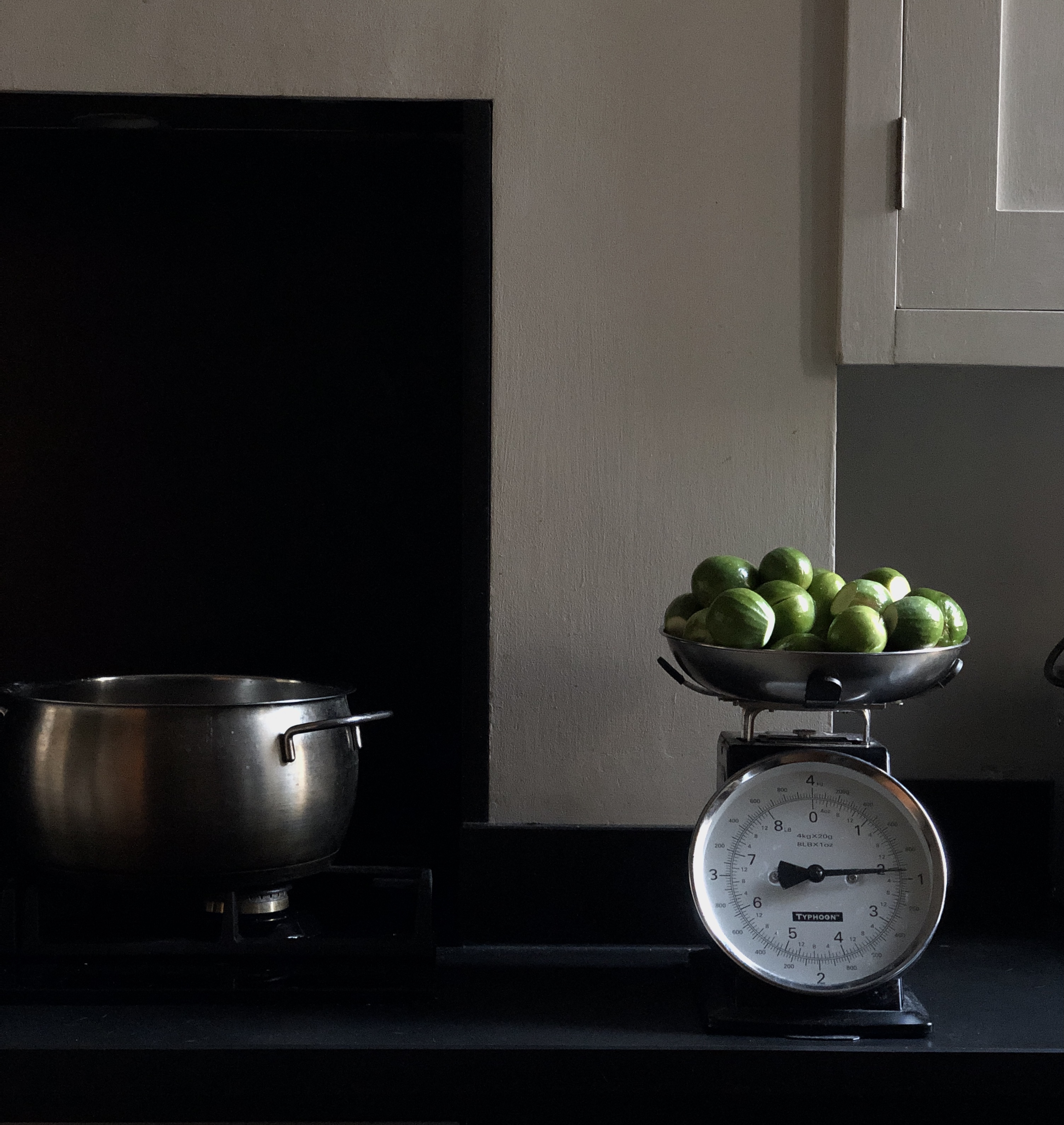


Like our hopes for 2020 and humanity going forth, what do you do with figs that never ripen? This recipe at least saves you, if you have a fig tree in the UK, from having to watch another thing rot under your nose. Our fig tree is only in partial southeast sunlight, so if you are in the same position, you will still have fruit hanging on that hasn’t quite made the grade.
My October funk is definitely spilling into November. I’d like to say just wake me up when this is over but I can’t afford the champagne coma I’d like to be in to last it out. Plus, until we know better, Trump hasn’t left the White House yet. And our local book shop, Muswell Hill Books (which I have been a customer of for at least 30 years, my mother longer) closed down today. Everyone feels the same. Well, almost everyone.*
*to the ‘we do not comply’ people. Fuck you.
**and anyone else who by now does not know what 2m looks like.
***and anyone who pretends to be exempt from/or refuses to wear a mask FU.
Back to the kitchen. This recipe originates from John Titterton, Cape Town, South Africa, and was published online thanks to the owner of this food blog: www.localfoodheroes.co.uk
As the note from Titterton explains: ‘the recipe was from my father, who used to make a few hundred bottles at a time and passed to me after his death. I make a batch every year if I am at home, but they do not last too long!’
We had a lovely green fig chutney once in Jan Harmsgat, Swellendam South Africa, in ‘the before time’. When we went back a few years later, the owners, Brin and Judy, had sold on their property, so when I asked after their fig chutney no one knew what I was on about. A couple had taken over the farm, ex-bankers from America; she was going to run the house while he had plans on turning the land into a pomegranate plantation to fill the market deficit when Israel was out of season. Our eyes glazed over as he shared their future vision; like a lot of Americans – and believe me, I say this being directly related to plenty – he had a loud voice and a lot of energy which quickly exhausted any interest in listening to him. Once his ego decided we were not anything ‘special’ financially, he lost steam too. We steered the deflated balloon of conversation back to the farm’s predecessors and reminisced about an adventure out with Brin in his jeep with his lovely Alsatian Lucky following us all the way across acreage in the evening sun. And then the American told us, without pause that Lucky had got run over just before Brin and Judy left and was found dead on the road we came in on.
You know going back to places that still have hold over your heart is never a good idea. Everything changes UNLESS IT IS PLASTIC. We only stayed one night. On the plus side, there were no Nazis there this time when we sat for dinner.
Titterton’s original recipe is for 100 figs and takes 2 days to make as the figs have to soak overnight, but his general advice is to allow 500ml of water and 500g sugar for each 500g of weighed figs. Then to add 1 tablespoon of lemon juice for each 250g figs.
My 50 figs weighed closer to 1.7kg, and some were ripe-ish while others were not, so I rounded down to the nearest 500g and calculated everything on the idea I had 1.5kg of figs, which made for 1.5kg of jam sugar and 6 tablespoons of freshly squeezed lemon. My reasoning was less sugar is better than more. The recipe does not use pectin – the lemon juice helps it thicken, but it does take time. Once the figs were in the sugar broth, I could see it had some way to go so I started ladling the developing fig syrup out and mixing it with sake and a squeeze of lemon juice over ice. It was so good that I actually siphoned off a cup of the fig syrup for future use. So, as I waited 2 hours for the sugar-fig-water-combo to reduce, I got jolly on my blush sake cocktail (recipe below).
Anyway, good luck. It won’t be bad. You can’t fuck this up unless you pass out on the couch. In which case your house/flat/timeshare/staycation will possibly burn down. Remember, no two consecutive years of homemade jam are ever the same. I found that my 50 figs made for 5 pots.
Ingredients:
- Approx. 50 green figs
- 1 heaped tbsp. bicarb of soda in 2 litres of water
- 1.5 litres water
- 1.5 kg jam sugar/preserve sugar
- 6 tbsp. freshly squeezed lemon juice
Instructions:
Day 1:
- Clean the figs, trim the stalks and score a cross into the bottom
- Mix the water and bicarbonate of soda and soak the figs overnight
Day 2:
- Drain and then weigh the figs, recording the weight – for 50 figs I got 1.7kg
- Place the figs in a pan of water and boil for 15 minutes or until the figs become soft*
- Drain the figs again
- Add 1.5 kg of sugar to 1.5 litres of water and boil until it just starts to thicken
- Add the figs and keep on boiling until the syrup thickens – this takes about 2 hours…
- Once the figs start to look more jammy, add the lemon juice and bring to the boil again** before removing from the heat
- let the jam cool slightly then bottle
*some figs soften quicker than others, so remove them with a spoon into the colander before they burst
**this did not happen to me but Titterton advises that if the syrup froths whilst boiling, add a small lump of butter. I also removed any figs that were just not willing to give before adding the fresh lemon juice. Fished out 5 tough green skins that went straight in the bin

SIDEBAR:
This chirped me up no end. As the figs boil in the sugar and water, you will need to keep an eye on it. So, mix this in a small tumbler over ice to help pass the time:
My Sake Blush:
- 3 parts sake
- 1 part fig syrup
- 1 part lemon, freshly squeezed
 FU2020