Hot Toddy

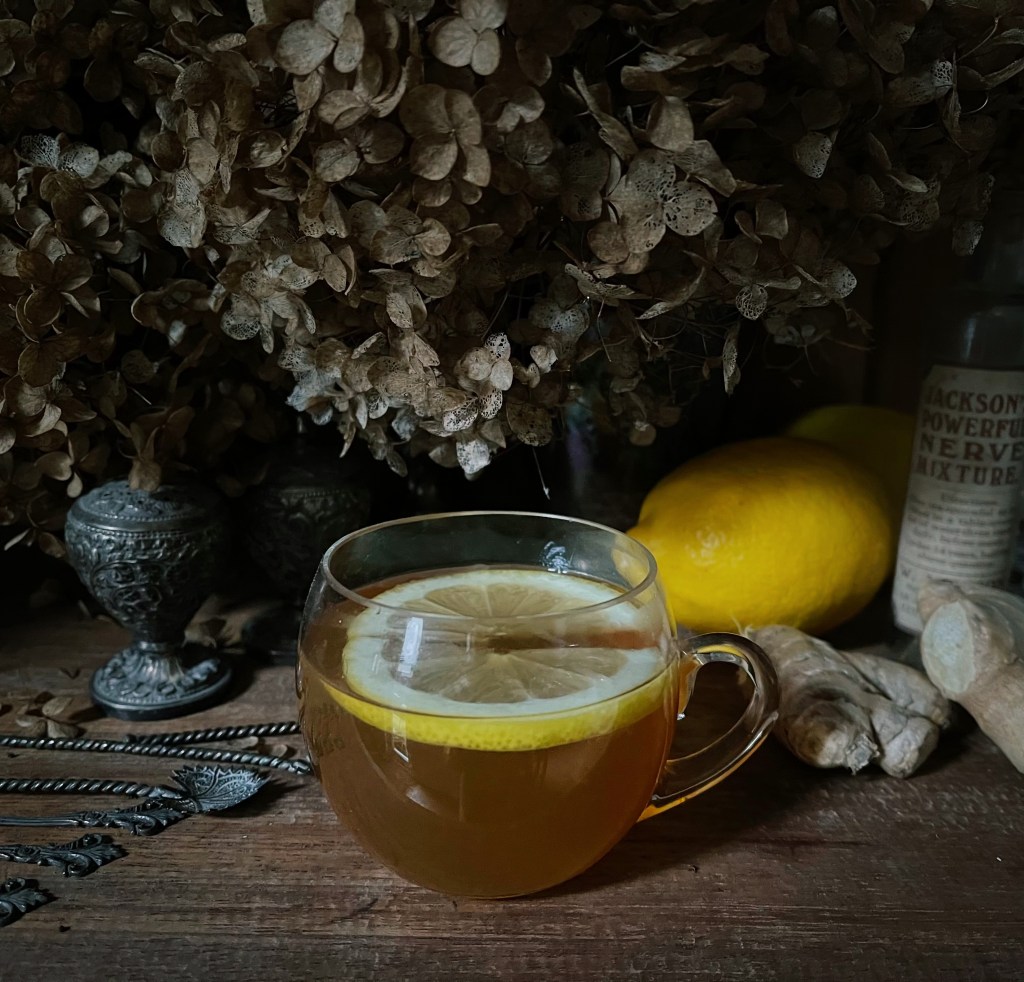
Hot toddy because it snowed on Sunday, the pavements are slippy and this month could not. be. going. any. slower.

Ingredients:

  • 80ml bourbon
  • Half a lemon, squeezed 
  • 1 tablespoon agave syrup 
  • ½ tsp. apple cider vinegar
  • Hot water 
  • 2 half lemon slices
  • Thin slice of ginger 

Stewed Tofu with Shiitake and Chilli

January has been pretty fucking bleak so far, and those I’ve talked to feel the same: tired on the outside, screaming within. So, here’s some food for comfort: Đậu hũ kho nấm, a Vietnamese stew that will add another veggie day or two to the week. 

This is based on a recipe from Luke Nguyon’sThe Songs of Sapa. It’s his mother’s recipe which he generously shares. Whilst a broader search will find variations on the theme, nothing beats the simplicity of this, nor the aromas that come from the pot as it simmers away on the stove.

I’ve used palm sugar, subbed red chillies for bird’s eye and upped the garlic: it requires a lot, crushed – nothing new in my kitchen but you might want to buy a garlic crusher; using the flat side of my blade night after night for a year has just started to properly do my head in. I’ll go back to using my knife once the urge to pull the skin off my face paces. On our last zoom, a friend told me she had a moment in the kitchen where, surrounded by her family, the people she loves most, she suddenly wanted to punch the inside of her fridge. This is our third lockdown but it’s not getting any easier.

Will serve 2 as a low-carb main, or 4 if served with Thai jasmine rice. The combination works and the rice is a doddle to make: without rinsing, add one cup of rice to one and a quarter cups of cold water in a pan, bring to a quick simmer, put a lid on it and simmer for 13 minutes, then move the pan off the heat, keeping the lid on and leave it to stand for another 13 minutes. All in all, it should take half an hour to achieve. Don’t lift the lid off until the very end or the rice won’t steam.

If you can’t get silken tofu, doesn’t matter – any tofu will do. 

Ingredients:

  • Silken tofu, 1 x 800g pack, approx. 400-500g drained
  • 750ml sunflower oil, for deep frying
  • 2 tbsp. palm sugar
  • 125 ml light soy
  • 1 tsp. dark soy
  • Half bulb garlic, crushed
  • 2 tbsp. rapeseed oil
  • 250g shiitake 
  • Generous pinch crushed black pepper
  • 3 red chillies, sliced on the diagonal

Instructions:

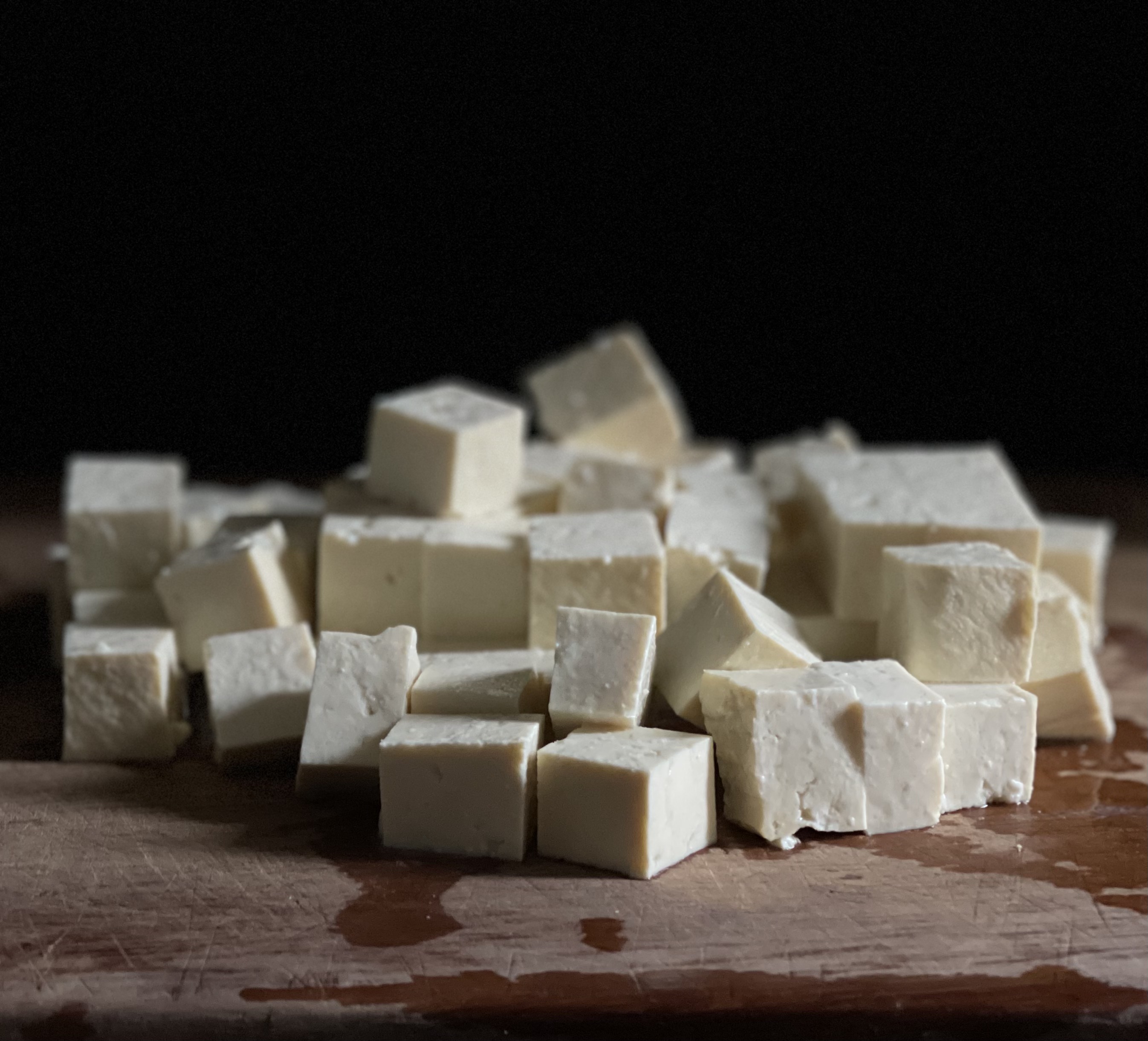
  • Cut your block of tofu into cubes or oblongs, doesn’t matter so long as they are even, about 2.5/3cm sq.
  • Deep fry the tofu in sunflower oil till crisp, about 3-4 mins. Try not to burn yourself or bring the house down
  • Move the fried cubes to kitchen towel and leave to cool
  • Mix the palm sugar with the light and dark soy in a large mixing bowl
  • To this add the shiitake and tofu and mix: for the shiitake, you want to remove the hard stems, halving the larger mushrooms, keeping the smaller ones whole 
  • In a small non-stick pan, heat the rapeseed oil and add the crushed garlic. Heat till garlic begins to crisp, then drain through a sieve, keeping the oil and the fried garlic separate
  • Add the garlic oil to the shiitake and tofu marinade, add half the fried garlic and a generous pinch of crushed black pepper. Toss this together. You want the shiitake and tofu 15 mins in the soy mix before moving everything to a heavy bottomed pan – either a clay pot or cocotte 
  • Bring this mix to a boil, then add 800 ml water, bring back to a boil, then lower to a simmer. Keeping an eye on the pot as you want it to simmer until the liquid has reduced by half. This will take about 40 mins, although if you are reheating the stew later, you might want to turn it off after 30mins and leave the pot on the hob with the lid on to allow the flavours to develop. You can reduce the liquid when you reheat it again
  • When you are ready to serve, turn the heat off, add the remainder of garlic and stir in. Garnish individual bowls with chopped red chilli to taste

Thai Glass Noodles with Jumbo Prawns

Life in Tier 4 and my mother has a PHD in Netflix whilst I have memorised the entire score to Ludwig Goransson’s ‘Mandalorian’ by heart. Are we evolving or devolving? Don’t ask me. No idea and don’t care. 

There are far more pressing questions, like why is my white mullet wig still in transit from Hong Kong despite ordering it over two months ago? Why do I still shop online knowing full well I am over the limit? Will I ever leave my house wearing the Oxford White Kimono purchased from Tokyo at 2am after watching ‘Mulan’ and crying for an hour? And where is my Japanese portable gas ring? And 3 canisters of butane? And why did I buy them when I don’t like camping, have a perfectly functioning gas hob and no one to invite over? 

This is what happens in isolation, when you combine a repressed imagination with no social life, alcohol and a Disney+ trial. Last week, doused in Disaronno, I nearly purchased a $350 replica baby Yoda, reasoning that it was a steal when the original sold for $5 million. 

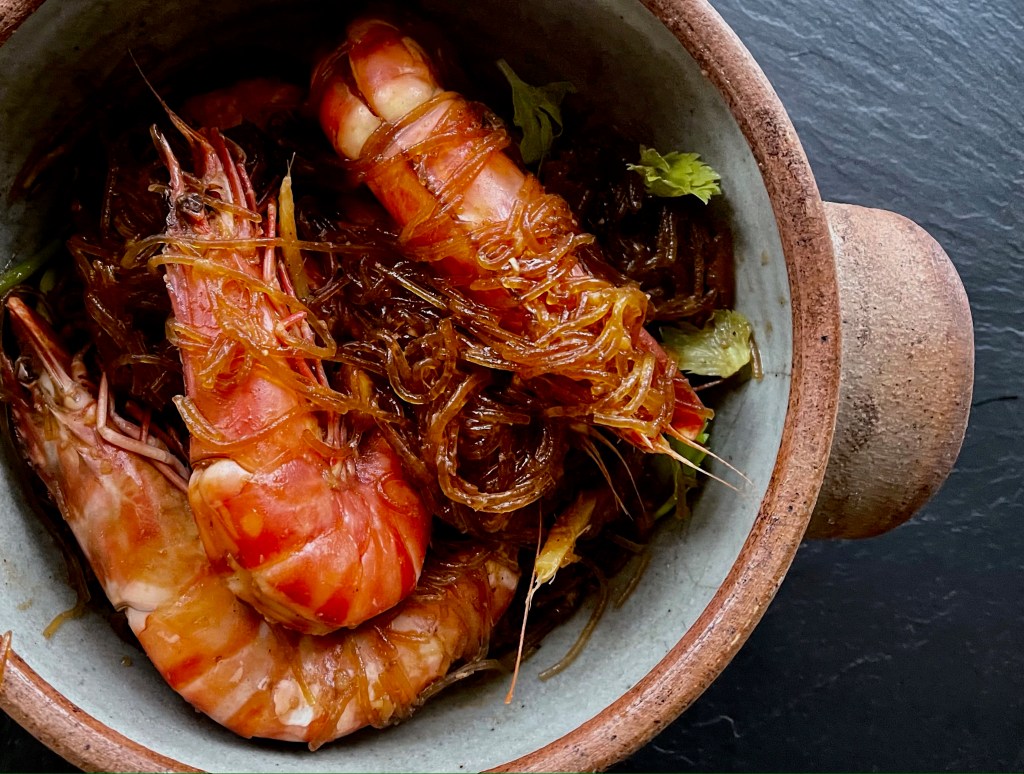
Teetering on the edge of a new year, better news came today: Oxford-AstraZeneca has been approved for use, the UK has 100m doses and our fishmonger has a tank of live Scottish lobster of which we have two. Tomorrow night we will be staying at home and making Goong Ob Woonsen, subbing lobster for jumbo prawns which have not been available panBrexmas*. If our incompetent government doesn’t fuck things up, 2021 might improve. Until then, count on idiots to flout rules despite the new kid in town: VUI-202012/01. And I don’t mean baby Musk-Grimes. People need to stop non-essential shopping FFS. What has any of this to do with glass noodles? Absolutely everything. Lobster is essential because when Big Ben chimes, this shit year will be over. 

*If lobster-subbing, don’t boil the lobster: put it in your freezer with plenty of room and, after half an hour, dispatch it humanely – definitely something you want to goog if it’s your first time, but in short, find the cross-shaped joint in the carapace and approximately halfway along an imaginary line drawn between the centre of the cross and the eyes, drive the blade of a sharp broad knife down to meet your chopping board. Once you have done this, which effectively severs the brain stem, you can split the lobster down the middle, top to bottom. Parts will continue to twitch as you carry out this process, but these movements are to do with the nervous system and not indications of life. Any mortician will tell you the same impulses present in the recently dead.

Now you can chop the lobster, shell-on, into chunks. Also chop the claws to save anyone having to fiddle with a cracker at the table . I use a stone mallet to help the blade achieve a clean quick cut through the shell and I also save the head in the freezer for future broths (I never throw much away when it comes to prawns and lobster – it all gets saved for stock). Then follow the recipe as you would do with the jumbo prawn. Just try not to overcook the lobster, because when the shell turns bright red and the meat’s no longer translucent, job’s done. And if you can’t get Chinese celery, then the feathery tops of any celery will do.

Serves 2

Ingredients (for sauce):

  • 1 inch ginger, peeled and sliced
  • half bulb of garlic
  • 2 tsp. ground white pepper
  • 4 tbsp. soy sauce
  • 4 tbsp. oyster sauce
  • 1 tbsp. dark soy sauce
  • 2 tsp. palm sugar
  • 1 tbsp. sesame oil

and:

  • 150g dry glass noodles
  • 6 jumbo prawn, heads & shell on, or 2 small lobsters, approx. 700g each
  • 1 tbsp. rapeseed oil
  • 1 inch ginger, peeled and thinly slices into matchsticks
  • 200g shiitake mushrooms, sliced
  • 2 Chinese celery stalks, heads chopped into 1 inch lengths
  • 1 cup water

Instructions:

  • Soak the glass noodles in room temperature water for 10 minutes: this varies depending on the brand of glass noodles you get, so I would start with tap water and top up with boiling water from the kettle, checking till the glass noodles give
  • Cut off any prawn antennae and use a knife, serrated best, to cut a shallow trench along the back of the prawn and devein
  • To make the sauce, grind the ginger and garlic into a paste
  • Add to this the rest of the sauce ingredients and stir until the sugar is dissolved: I use a jar to combine them all and give them a good shake
  • Drain the softened noodles, cut across the bundle to make them more manageable later
  • Place the noodles and shiitake into a large bowl. Pour the sauce over, toss, and leave to sit
  • Add the rapeseed oil and ginger to a heavy-bottomed pot and heat over medium heat. Once the oil is sizzling, add the noodles and then place the prawn on top
  • Now add the cup of water, cover and cook for about 5 minutes on a medium heat
  • Open the lid and give the noodles and prawn enough of a stir to make sure sauce is thoroughly distributed
  • Continue to cook until the noodles and prawns are hot and there is not much liquid left
  • At this point you can add the Chinese celery, give it all another toss and serve

Chicken Ramen Konnyaku

Ramen literally means ‘Chinese style-noodles’ so forgive me for bastardising yet another dish. If ramen calls to mind hand-thrown floury threads bound with egg, that’s not happening here. This won’t be ramen as you know it, but what it also won’t be is a meal that makes you bloat because I use seaweed konnyaku.

I came upon konnyaku noodles whilst having a poke about the chill section of a local Asian supermarket during lockdown2. I was bored, the shop was fairly empty so I browsed. The noodles come in watery pouches and two colours, either green or brown; both looked similar to shirataki and checking out the contents, turns out this is because konnyaku is also from the yam/toro family. 

A quick goog and the few reviews I found describe it as ‘spinach’ flavoured, but it’s not: seaweed powder gives it colour but not much else: konnyaku has almost zero calories, contains no sugar, no fat, no gluten, no grain and no protein. So why eat it? my mind screamed before rationalising that if Buddhists are right and we are nothing more than the sum of what we put into our bodies, perhaps partaking of it will give way to lighter thoughts? Nah, I countered, heading to the till; not in this economy, nor the political shit-fest that is 2020, whirligiging its way along with covid into the new year.

For this recipe I used the brown konnyaku, just because as someone who eats with their eyes, I think it compliments the glazed chicken and brown beech mushrooms better. I also prefer dashi miso for this because its savoury saltiness works well with the rest. One website touts konnyaku noodle as ‘one of the most effective items for defending yourself from fatness’. Funny, but also bollocks. Depends entirely on what you do with the rest of your day. 

Ingredients:

  • 1 litre clear chicken stock
  • 4 carrots
  • 1 x large pak choi, approx. 250g, stalks for stock, green heads shredded for ramen
  • 1 bunch spring onions, half for the stock, the rest for garnish
  • 1 inch ginger, crushed
  • 2 x seaweed konnyaku noodle
  • 2 x chicken breast
  • 1 tbsp. rapeseed oil
  • 2 tbsp. mirin
  • 2 tbsp. soy sauce
  • 1 tablespoons sesame oil
  • 1 pinch ground white pepper
  • 1 teaspoon sesame seeds
  • 500g beansprouts
  • 2 tbsp. dashi miso paste
  • 2 tbsp. white sesame seeds, toasted
  • 1 garlic clove, minced
  • 1 pinch hot chilli powder
  • brown beech mushrooms
  • enoki mushrooms

Instructions:

  • Begin by prepping the chicken stock – this can be done in the morning to allow the flavours to develop, or not. Add 3 of the carrots to the stock along with the spring onion, the stalks of the pak choi and the crushed ginger – you can do this by giving the ginger a bash with a rolling pin. Bring the stock to a simmer and keep it there for 30 mins. Strain and reserve
  • When you are ready to make the meal, rinse the konnyaku noodles in a sieve under cold water and set aside to drain
  • Very thinly slice the remaining spring onions for garnish. Set aside
  • Then prep the chicken breast: in a non-stick pan heat the rapeseed oil and fry the breasts to get some colour. Then add the mirin, the light soy sauce, white pepper and the sesame oil and turn the breasts frequently as the mixture quickly develops into a glaze
  • Remove the breasts from the pan, sprinkle with toasted sesame seeds and leave until cool enough to handle. You want to slice each breast on the diagonal before placing in the ramen bowls
  • Now mix the white miso paste with the minced garlic and chili powder
  • In a pan, bring the broth to a near simmer, stir in the miso paste until incorporated. Do not let it reach a rolling boil as you want to keep the goodness of the miso from spoiling
  • Place the noodles in the ramen bowl, then place about it the beansprouts, the shredded pak choi and the mushrooms, each in their own section
  • Now pour the simmering broth into the ramen bowl
  • Finally place the chicken breast to one side, arranging it so it sits a little proud of the broth, then the spring onion

Singapore Kelp Noodle

Since this shitty year started, I’ve eaten out four times: we had a November reservation at China Tang, but when that did not happen, rescheduled for the 4th of D: main restaurant was heaving so switched to a quieter table away from the melee where we pretended, clutching our whisky sours, that we were not being idiots too.

Lockdown 2 had me revisiting Chinese favourites whilst stuck at home. No. 1: Singapore Vermicelli, although after a year apart, I’d forgotten what it looked like.  From memory, it had turmeric in it. And beansprouts. After a goog, turns out I know nothing about Singapore Vermicelli. And neither does Singapore. Nor my father. As a child I could depend on him ordering it, knowing I’d have some of his to share, but those days are gone. When I asked him today what he thought went in it, he said ‘junk’. And it’s his favourite dish too, so that’s love for you.

Singapore V is actually a Cantonese dish from Hong Kong made with ‘the British invention of curry powder’, a conceit that can go straight in the bin. Further down the hole, variations include peas, carrots, mushrooms, Chinese cabbage and water chestnut… what. the. actual. fuck. What I do know, before I lose my mind, is that I’m not turning this into a dog’s dinner: I’m resurrecting the dish I’m most nostalgic for (think 80’s China Town and Wong Kei before it got a 1-out-of-5-star hygiene rating in the millennium). 

My recipe uses kelp noodles and beansprouts because I am on diet and obsessed with beansprouts: they taste fabulous, are low cal. and packed with calcium, vitamin c and iron. A lot of recipes also call for pork Char Sui, but I think it’s too noisy. For me, this has always been about the comfort of slightly dry curried noodles and beansprouts, with highlights of egg and bacon, so have opted for Ibérico instead – the thinly sliced Ibérico you typically get for Shabu Shabu.

This dish should be made with rice vermicelli but despite being fat free, vermicelli has a significantly higher carb content versus kelp noodles (44/100g v. 1/100g respectively). So that’s what I’m going for because I’m getting older and keeping the weight off is getting harder. And then there’s menopause to look forward to, if Covid doesn’t get me first.

If you are not into eating your friends, then tofu is the sub, but to handle all that tossing I’d opt for crispy frying/baking it first so it holds itself. 

Ingredients:

  • 340g kelp noodles
  • 14 king prawns, shelled and deveined
  • 1 chicken breast
  • 200g Ibérico pork, thin slices
  • 4 tbsp. peanut oil
  • 3 eggs, beaten
  • 1 red pepper, quartered and sliced into strips
  • ½ an onion, thinly sliced 
  • 400g beansprouts
  • 2 tbsp. Shaoxing Chinese cooking wine 
  • ½ tsp white sugar
  • 2 tsp Madras curry powder
  • 2 tsp chilli powder
  • ½tsp turmeric powder 
  • ½ tsp ground white pepper
  • ½ garlic bulb, minced
  • 1 inch ginger, grated
  • 2 thinly sliced green chilli

Instructions:

  • Preheat oven to 180C. Cook the chicken and pork for 20 minutes, remove and leave to cool before slicing the chicken into strips and cubing the pork
  • Remove the kelp noodles from the pack, place in a bowl and cut in half before soaking in water for 20 mins. Drain and set aside
  • Combine the Shaoxing, sugar, spices and white pepper in a bowl 
  • Heat a tbsp. of the peanut oil in a wok over medium heat, add the king prawns and cook until just done – remove and set aside
  • Add 2 tbsp. peanut oil into the wok. Add the beaten egg and keep moving the wok so the egg keeps moving in a broad circular shape – and this takes some arm work. You want to make a thin omelette so once almost all the egg is set, use a spatula to roll it up in the wok and then onto a chopping board. Slice into strips when slightly cooled
  • Add another tbsp. of peanut oil to the wok and then add the garlic, then the grated ginger and fry briefly
  • Then add the onion and stir fry until the onion begins to soften
  • Then add the red pepper and fry for another minute or so
  • Add half the kelp noodles, half the beansprouts, half the Shaoxing and spice mixture and toss
  • Then add the chicken and pork and toss again
  • Add the rest of the Shaoxing mixture, the remainder of noodles, give it a good mix and add the beansprouts, prawns and egg
  • Toss again until everything is heated through. Serve immediately

Miso Soup

Miso Soup 味噌汁

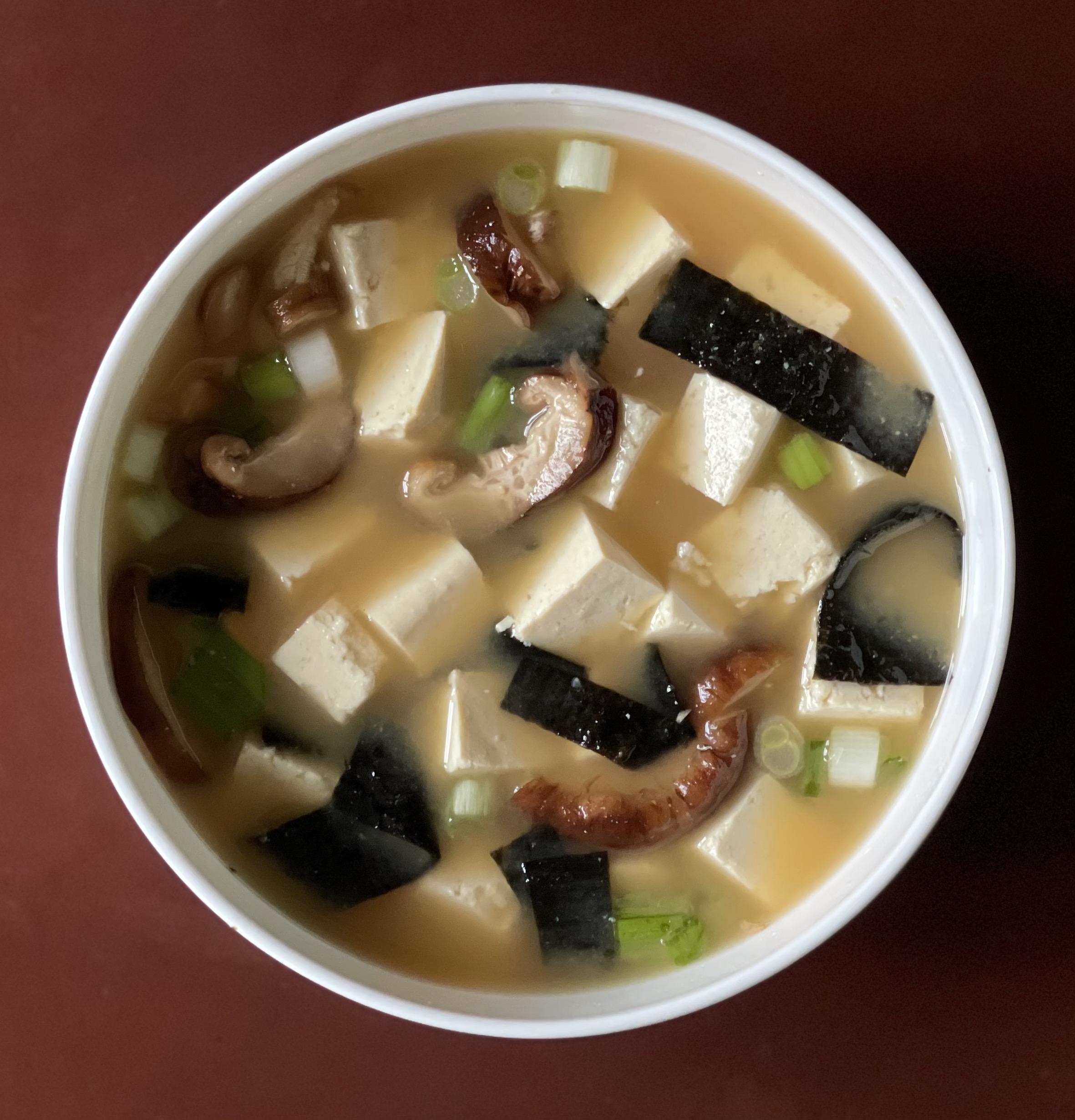
Miso soup from scratch isn’t as hard as you might think. It doesn’t take long to make – boss this and you can get it to table in 15 minutes. Once you have the key ingredients (katsuobushi flakes, miso, mirin) add what you like, although being biased, I’m sticking to this iteration which is similar to but heartier than the miso soup you’d typically get at a sushi bar.

We’ve been having this as our Monday meal since lockdown no.1 and have not tired of it yet. It’s comforting and will suit anyone one on a 5:2 intermittent fast for those 500 cal. days. Despite its relatively high salt content, the health benefits of fermented soya beans packs it with vitamins, promotes good gut health and helps with digestion. This is also why you must not let it boil. Boiling the soup will destroy the probiotic cultures and compromise its umami-ness. Plus the seaweed will disintegrate. 

Japan has hundreds of miso varieties. For this recipe, I use red Hikari miso because it is readily available in London and the higher percentage of soy beans and longer fermentation process lends a deeper flavour to the soup. For the base, I make katsuo dashi using katsuobushi – dried and smoked skipjack tuna flakes. I used to make awase dashi (using kombu & katsuobushi) but during the first lockdown I couldn’t get kombu for long enough to decide the soup did not miss it. 

If you are vegan/vegetarian, you will want kombu because you can make a fine dashi with it. All else failing, reconstituting dried shiitake mushrooms will also give you stock you can use and mushrooms for the soup.

For 2 as a main, or 4 starters

Ingredients:

  • 20g Katsuobushi flakes
  • 1 litre boiling water 
  • 2 tbsp. Hikari red miso
  • 1 tblsp. mirin
  • 325 g firm or medium firm tofu cubed 
  • 1 x bunch spring onions, sliced into rounds, 5mm-1cm 
  • 10 shiitake mushroom, 5mm slices 
  • 7 sheets nori seaweed, cut into short strips 

Instructions:

  • First begin by making the dashi that forms the base of your soup: boil 1l of water and soak the Katsuobushi flakes in it for 10 minutes. They will sink to the bottom so you can stir it once or twice to help the flavour develop 
  • Meanwhile mix 2 tablespoons of Hikari miso with 1 tablespoon mirin in a bowl to form a paste
  • Drain the dashi through a fine sieve directly into a pan, discarding the katsuobushi after squeezing it out 
  • Add the miso/mirin mix to the dashi and stir until incorporated 
  • Placing the pan on a low heat, add the tofu, spring onion and shiitake slices
  • Cut the nori seaweed into short strips and add when the soup just reaches a simmer (you want to do this towards the very end because the seaweed will start to disintegrate if left for too long. Even if this happens, the nori imparts a lovely flavour to the soup, so don’t let it stress you out)
  • Definitely do not let soup boil, so keep an eye on it and when shows any sign of going from simmer to boil, remove from the heat and serve 
  • The amount above makes for 4 small servings: for a main, we have one bowl and then the other, so effectively in two servings. Take the soup off the heat between servings so it does not boil 

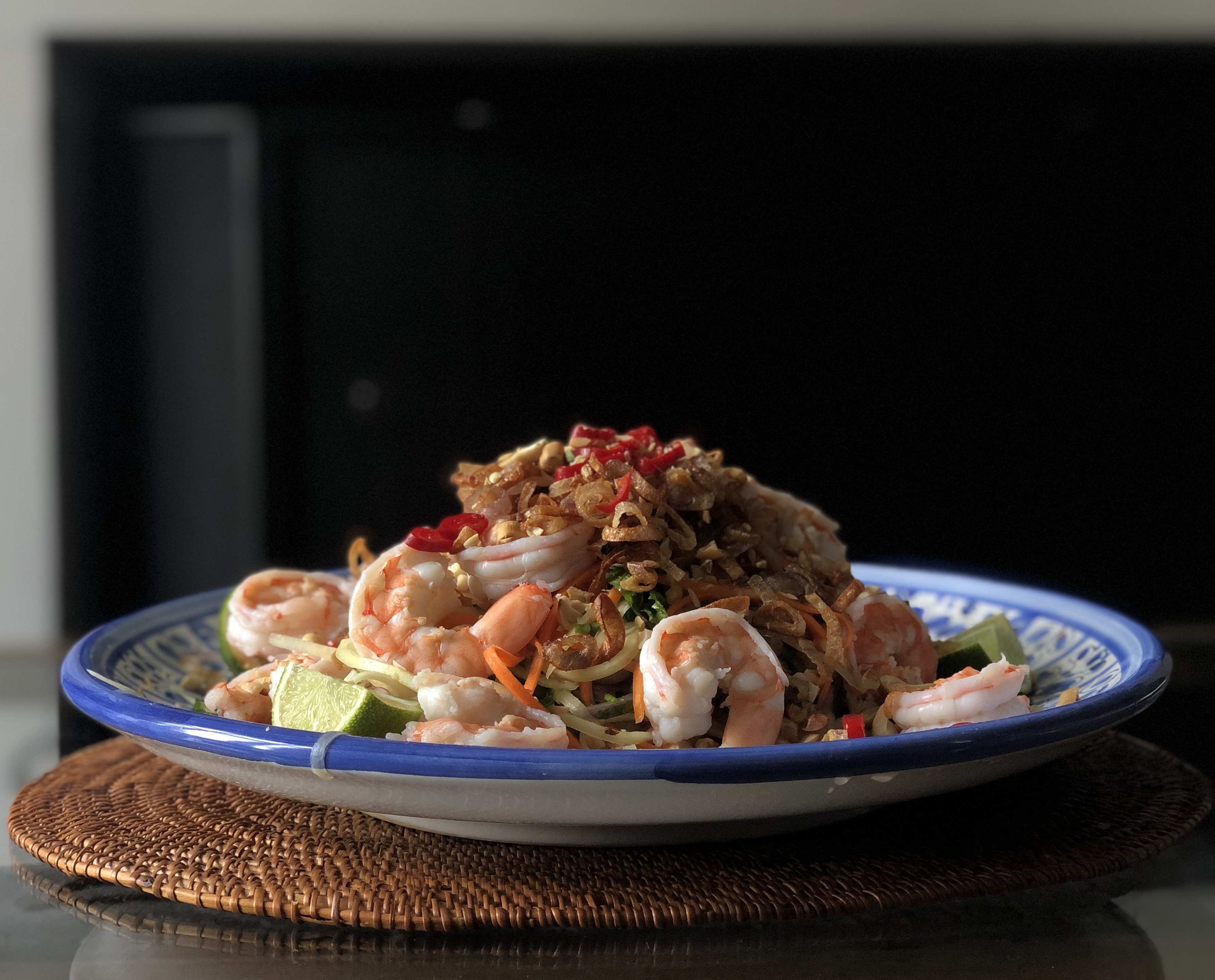
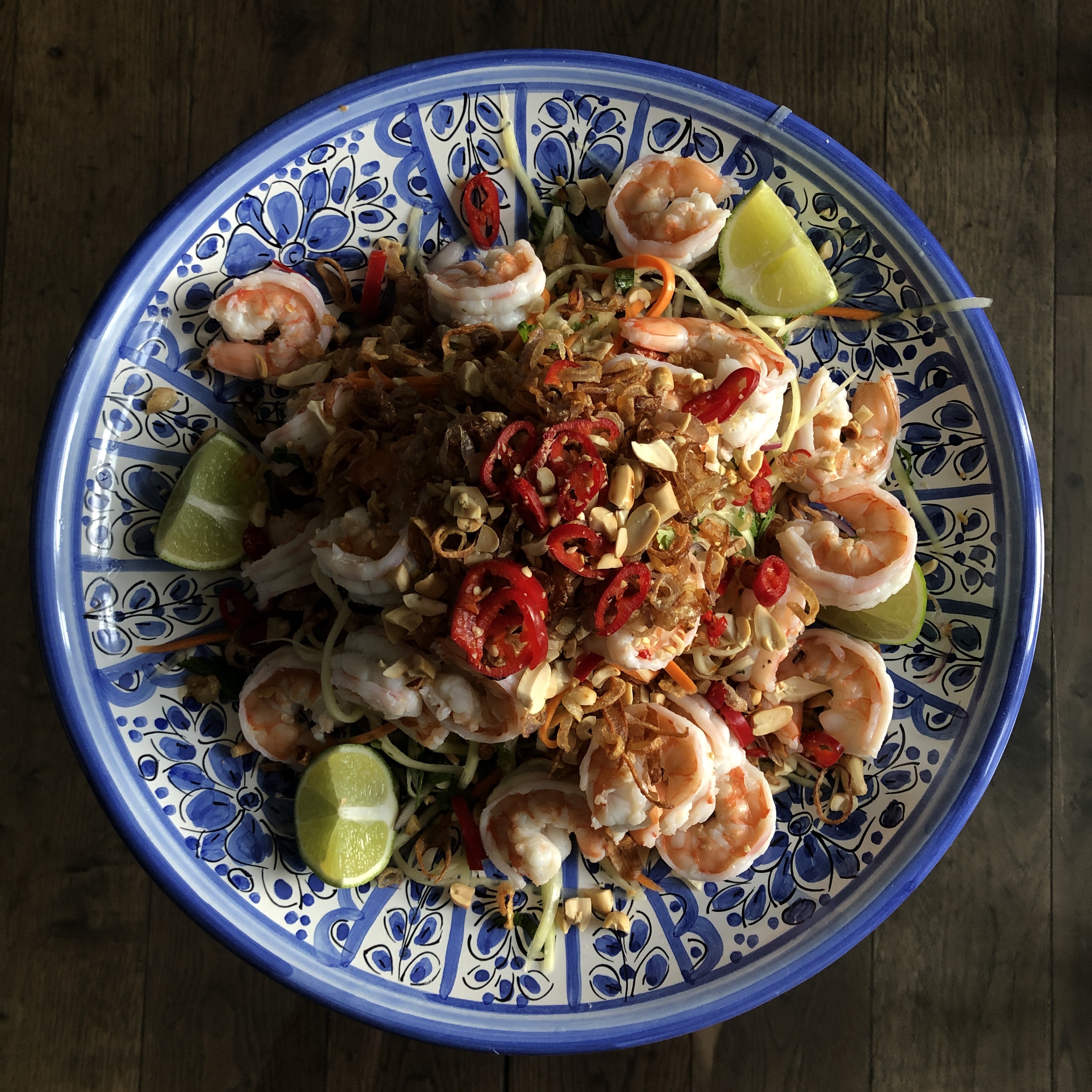
Vietnamese Green Papaya Salad with King Prawns

Gỏi đu đủ tom thi differs from the Thai version in that it isn’t as sweet but a little saltier. The dressing for this (and why it is seriously addictive) is nước chấm – a Vietnamese staple, it can be used across a variety of recipes and explains why, with the help of fresh chilli, this dish is still on demand in our household over colder winter months. 

I’ve ordered the recipe in 3 stages: fried shallots are fiddly but worth it – if you can’t get Thai, any shallot will do; for the salad, you need a julienne peeler which is  inexpensive to get; if you can’t find palm sugar, sub with white or demerara. And please don’t use papaya for this recipe UNLESS GREEN & UNRIPE. It should have chalk-white flesh, similar to a granny smith.

Serves 2 as a main

Ingredients:

for the nước chấm: 

  • 9 tablespoons/150ml boiled water
  • 3 tablespoons lime juice
  • 3 tablespoons sugar
  • 4 tablespoons fish sauce
  • 1 clove garlic, crushed
  • 2 bird’s eye chilies, chopped

for the crispy shallots:

  • 450g red Thai shallots, peeled and sliced
  • 475 ml organic sunflower oil
  • kosher salt

for the salad:

  • 20 king prawns, peeled and deveined
  • 1 unripe green papaya, peeled and julienned
  • 1 large carrot, or 4 mini ones, peeled and julienned
  • 4 red bird eye chili, sliced with seeds
  • 1 large red onion, thinly sliced
  • 1 x small bunch mint leaves, finely sliced
  • 1 x small bunch Thai basil leaves, finely sliced
  • 1 x small bunch coriander, chopped
  • 2 tablespoon peanuts, toasted and crushed

Instructions:

for the nước chấm: 

  • In a bowl dissolve the sugar in the boiled water then combine with lime and fish sauce
  • Add the chili and garlic and mix well – it should be sweet, tart and salty at the same time. Adjust to taste (this can keep in a jar up to a month)
  • Then thinly slice the red onion from the salad ingredients and in a separate bowl add to 3 tbsp. of nước chấm and marinate for at least 1 hour. Keep the rest of the nước chấm aside
  • Then make the crispy shallots (see below)

for the crispy shallots:

  • Slice the shallots into thin rounds 
  • Line a baking tray with 4 layers of folded kitchen towel
  • Set a fine sieve over a saucepan
  • Put the oil into a wok – the saucepan and sieve are for when you want to take the shallots off
  • Add the shallots to the oil in the wok over high heat and fry, stirring frequently, until shallots begin to bubble. Stir constantly as the shallots fry to ensure even cooking, until shallots turn pale golden brown – about 8 to 10 minutes 
  • Working quickly, pour contents of wok into the sieve set over the saucepan – the shallots will continue cooking for a brief period after draining. Allow to cool
  • Transfer shallots onto the kitchen towel, spreading them out into an even layer, and season with salt
  • After a few minutes, carefully lift the top layer of paper towel and roll the shallots onto the second layer, blotting gently with the first
  • Repeat until shallots are on the last layer of paper towels and mostly grease-free and cool to room temperature

for the salad:

  • Make the roasted peanuts: toast in a pan and leave to the side. Then crush under a rolling pin and save for later 
  • Add the cleaned prawns to boiling water for 4minutes, check one for being cooked through and immediately plunge into ice cold water, transferring to kitchen towel once cool
  • In a large bowl combine the shredded green papaya, carrot, herbs and mix
  • Add the red onion in nước chấm and mix well
  • Turn onto bowl, arranging prawns around the salad and sprinkling with crushed peanuts and fried shallots
  • Serve with the nước chấm, some Sriracha and wedges of lime on the side

Green Fig Jam

Like our hopes for 2020 and humanity going forth, what do you do with figs that never ripen? This recipe at least saves you, if you have a fig tree in the UK, from having to watch another thing rot under your nose. Our fig tree is only in partial southeast sunlight, so if you are in the same position, you will still have fruit hanging on that hasn’t quite made the grade. 

My October funk is definitely spilling into November. I’d like to say just wake me up when this is over but I can’t afford the champagne coma I’d like to be in to last it out. Plus, until we know better, Trump hasn’t left the White House yet. And our local book shop, Muswell Hill Books (which I have been a customer of for at least 30 years, my mother longer) closed down today. Everyone feels the same. Well, almost everyone.* 

*to the ‘we do not comply’ people. Fuck you. 

**and anyone else who by now does not know what 2m looks like.

***and anyone who pretends to be exempt from/or refuses to wear a mask FU.

Back to the kitchen. This recipe originates from John Titterton, Cape Town, South Africa, and was published online thanks to the owner of this food blog: www.localfoodheroes.co.uk

As the note from Titterton explains: ‘the recipe was from my father, who used to make a few hundred bottles at a time and passed to me after his death. I make a batch every year if I am at home, but they do not last too long!’

We had a lovely green fig chutney once in Jan Harmsgat, Swellendam South Africa, in ‘the before time’. When we went back a few years later, the owners, Brin and Judy, had sold on their property, so when I asked after their fig chutney no one knew what I was on about. A couple had taken over the farm, ex-bankers from America; she was going to run the house while he had plans on turning the land into a pomegranate plantation to fill the market deficit when Israel was out of season. Our eyes glazed over as he shared their future vision; like a lot of Americans – and believe me, I say this being directly related to plenty – he had a loud voice and a lot of energy which quickly exhausted any interest in listening to him. Once his ego decided we were not anything ‘special’ financially, he lost steam too. We steered the deflated balloon of conversation back to the farm’s predecessors and reminisced about an adventure out with Brin in his jeep with his lovely Alsatian Lucky following us all the way across acreage in the evening sun. And then the American told us, without pause that Lucky had got run over just before Brin and Judy left and was found dead on the road we came in on. 

You know going back to places that still have hold over your heart is never a good idea. Everything changes UNLESS IT IS PLASTIC. We only stayed one night. On the plus side, there were no Nazis there this time when we sat for dinner. 

Titterton’s original recipe is for 100 figs and takes 2 days to make as the figs have to soak overnight, but his general advice is to allow 500ml of water and 500g sugar for each 500g of weighed figs. Then to add 1 tablespoon of lemon juice for each 250g figs. 

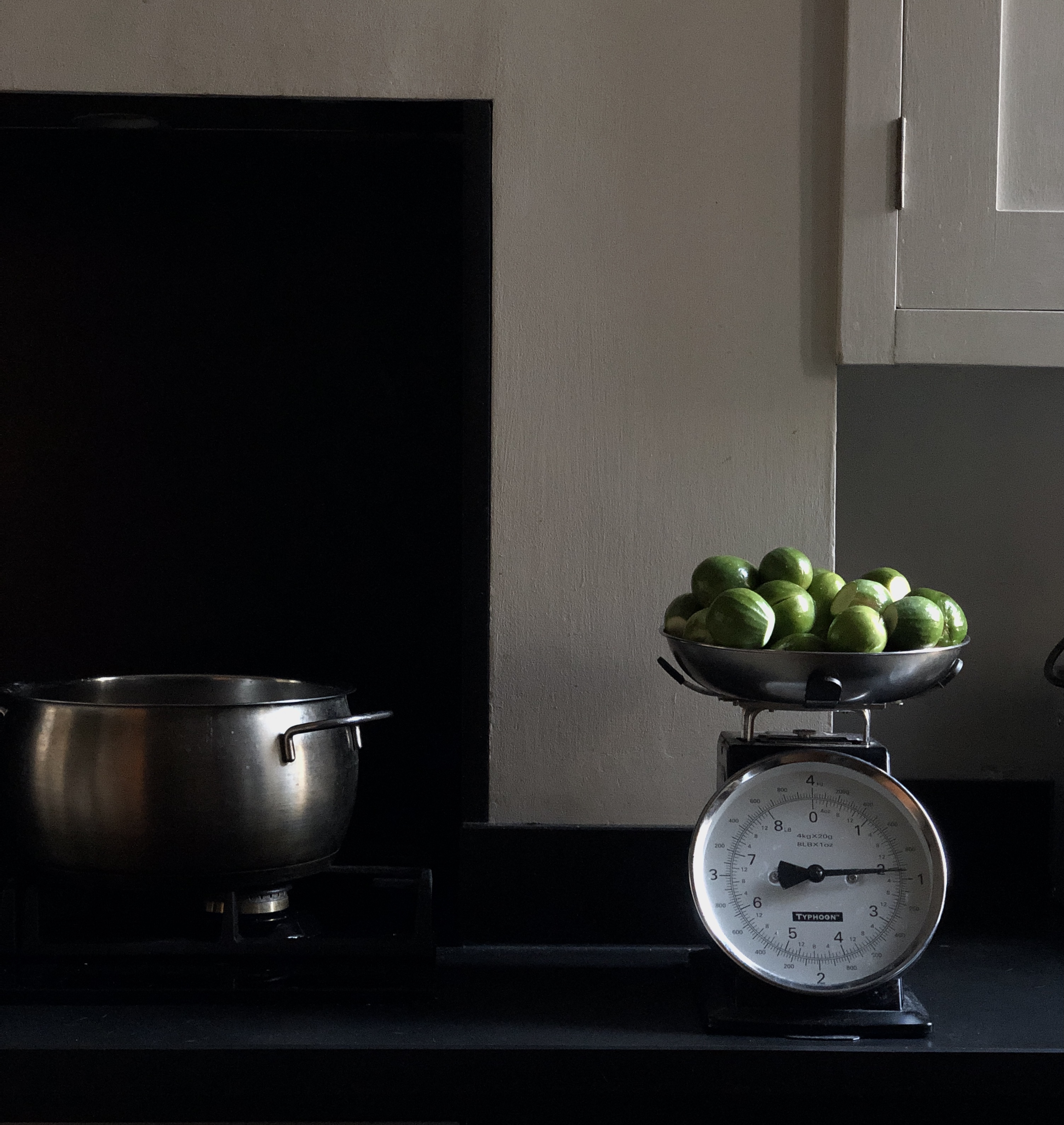
My 50 figs weighed closer to 1.7kg, and some were ripe-ish while others were not, so I rounded down to the nearest 500g and calculated everything on the idea I had 1.5kg of figs, which made for 1.5kg of jam sugar and 6 tablespoons of freshly squeezed lemon. My reasoning was less sugar is better than more. The recipe does not use pectin – the lemon juice helps it thicken, but it does take time. Once the figs were in the sugar broth, I could see it had some way to go so I started ladling the developing fig syrup out and mixing it with sake and a squeeze of lemon juice over ice. It was so good that I actually siphoned off a cup of the fig syrup for future use. So, as I waited 2 hours for the sugar-fig-water-combo to reduce, I got jolly on my blush sake cocktail (recipe below).

Anyway, good luck. It won’t be bad. You can’t fuck this up unless you pass out on the couch. In which case your house/flat/timeshare/staycation will possibly burn down. Remember, no two consecutive years of homemade jam are ever the same. I found that my 50 figs made for 5 pots.

Ingredients:

  • Approx. 50 green figs
  • 1 heaped tbsp. bicarb of soda in 2 litres of water
  • 1.5 litres water
  • 1.5 kg jam sugar/preserve sugar 
  • 6 tbsp. freshly squeezed lemon juice

Instructions:

Day 1:

  • Clean the figs, trim the stalks and score a cross into the bottom
  • Mix the water and bicarbonate of soda and soak the figs overnight

Day 2:

  • Drain and then weigh the figs, recording the weight – for 50 figs I got 1.7kg
  • Place the figs in a pan of water and boil for 15 minutes or until the figs become soft*
  • Drain the figs again
  • Add 1.5 kg of sugar to 1.5 litres of water and boil until it just starts to thicken
  • Add the figs and keep on boiling until the syrup thickens – this takes about 2 hours…
  • Once the figs start to look more jammy, add the lemon juice and bring to the boil again** before removing from the heat
  • let the jam cool slightly then bottle

*some figs soften quicker than others, so remove them with a spoon into the colander before they burst

**this did not happen to me but Titterton advises that if the syrup froths whilst boiling, add a small lump of butter. I also removed any figs that were just not willing to give before adding the fresh lemon juice. Fished out 5 tough green skins that went straight in the bin

SIDEBAR:

This chirped me up no end. As the figs boil in the sugar and water, you will need to keep an eye on it. So, mix this in a small tumbler over ice to help pass the time:

My Sake Blush:

  • 3 parts sake
  • 1 part fig syrup
  • 1 part lemon, freshly squeezed